
Children’s Books About Leg/Foot Braces
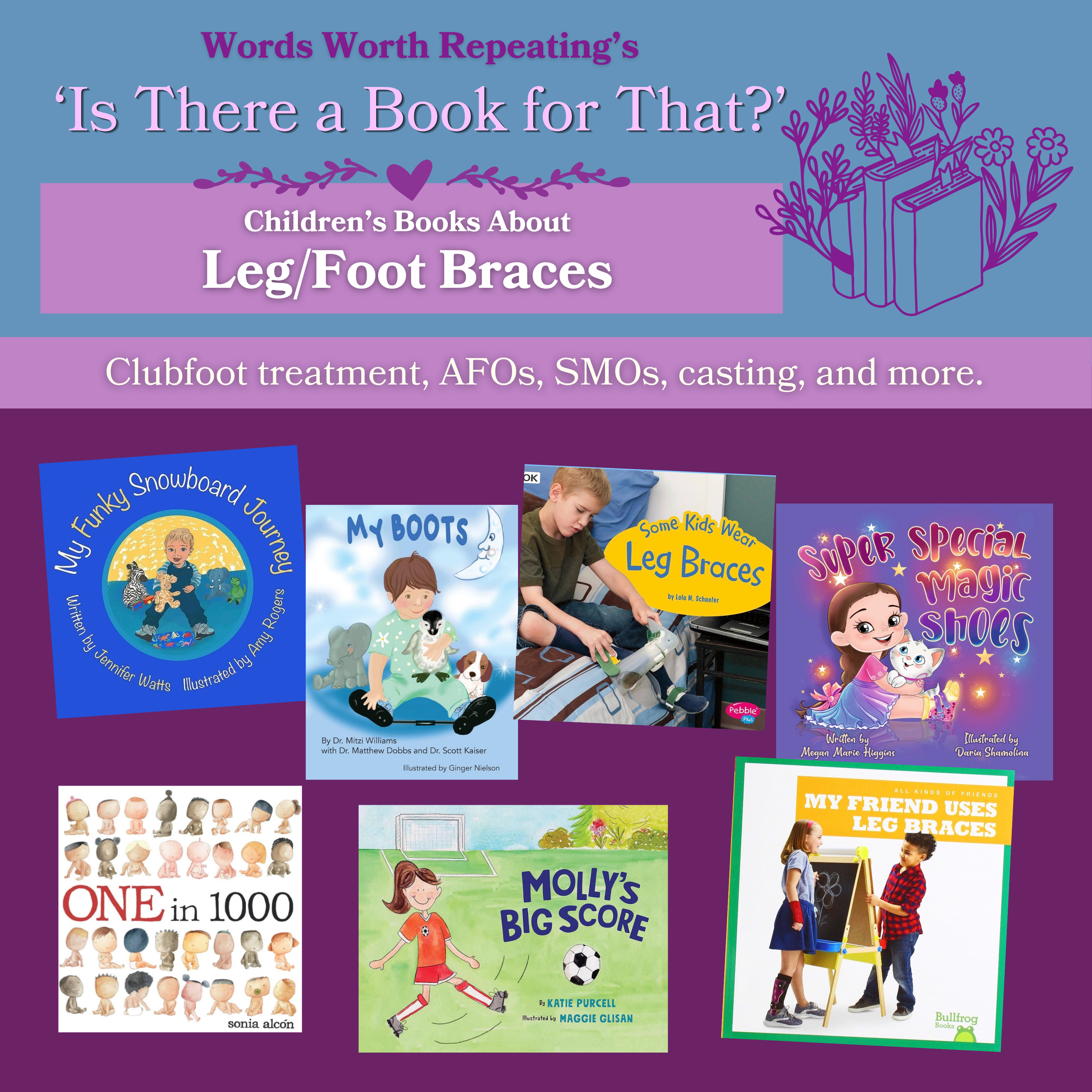
When a child has something that visibly makes them different than their peers, there are several things that adults can do to help. The first step is to learn how the child feels about it. Some kids can tell you that they would love to go in front of the class and answer everyone’s questions about their difference to “just get it out there”. Others would much rather ignore it, in hopes that everyone else will follow suit. Neither of these things are wrong. It is the child’s choice to do what works for them, but as their caretaker, you can be a part of informing them. They should be knowledgable about their own body. They should understand that they aren’t the only one that needs this kind of care. If they do want to address their difference with the class, you can advocate for that, and maybe even help the school find resources that can help.
Today I am sharing books that can be read at home to build confidence and normalcy. They can help with compliance, and if the situation is right, some of them could be shared with friends, classmates, or family. Many kids go to physical therapy, wear braces, or need special exercises to strengthen their legs. So I am happy to share these books that help families have positive conversations and coping.
Read below to find which books are the best fit for your family. A majority of the books I found are for younger children. Please keep in mind that I have shared a lot of books on related topics such as inclusivity, diversity, limb differences, adaptive devices, cerebral palsy, and more. Use the search bar on the blog home page to find more great books that can support the children in your life.
Super Special Magic Shoes by Megan Marie Higgins
This rhyming, simple book celebrates orthotics as being special shoes that help kids with muscles that work differently. The book is told from the perspective of a young girl and the illustrations are full of lots of rainbows, sparkles, and butterflies that will spark some kids' interests. The book positively reinforces the good things about orthotics and highlights some of the different experiences kids can have like orthotics of different colors, heights, etc. At the end of the book, the book explains different kinds of leg braces: AFOs, SMOs, KAFOs, and HKAFOs. It also talks about how most orthotics are made with pictures of one child’s experience. If you have a child that will be getting orthotics for the first time, these pictures could help prepare them for the experience. The entire book is great for young children through early elementary.
https://amzn.to/3TxGHTt
My Friend Uses Leg Braces by Bullfrog Books
This easy reader shows a variety of kids living life with leg braces. The pictures show kids of a variety of ages and who need leg braces for a variety of reasons. While the text is super simple, it does mention things like how kids need new braces as they grow and that they support muscles in different parts of the leg. At the end, the book provides a glossary that shows a variety of tools that sometimes partner with braces such as a wheel chair or canes. It also explains some important concepts. This book could be helpful in normalizing leg braces or talking to a child about a friend or family member’s braces. Good for young children through beginning readers.
https://amzn.to/4jaYtGq
Some Kids Wear Leg Braces by Lola M. Schaefer
This book is another easy reader that shows pictures of kids in leg braces. The text in the book touches on going to physical therapy, different sizes of braces, reasons that kids wear braces. Then the book continues by showing kids doing everyday kids stuff like going for a walk and doing homework. This book could be helpful for preschool classrooms who have questions about a classmate’s braces or it could be used at home to answer questions and help address differences at home, so they can be a great friend at school or other places. This book is good for young children through young elementary-aged.
https://amzn.to/4xWCBmX
Molly’s Big Score by Katie Purcell
This book is about a girl who wears leg braces and has exercises to do to help her body. She has Cerebral Palsy and gets frustrated that she falls and has trouble when trying to play soccer. Her mom reminds her that the exercises can’t help if she doesn’t do them, but she feels frustrated that she has to put so much effort into something that comes easily to other people. Throughout the book, her friend starts doing her exercises with her, and she learns that everyone has challenges that they have to put more effort towards. In the end, she starts to see the benefits of doing her exercises, and it pays off when playing in the neighborhood soccer game. This book is a perfect addition to any physical therapy or occupational therapy office or for families who have a child who wears braces. The relatable story can be an important reminder to kids who feel alone or bored with doing their exercises. Good for preschool through middle elementary aged kids. https://amzn.to/3T5q3u8
Clubfoot Books:
My Boots by Dr. Mitzi Williams with Dr. Matthew Dobbs and Dr. Scott Kaiser
This book is written from the perspective of a 3-4 year old child. The child explains that their feet turned in when they were born. It describes wearing casts that were molded to their feet and now they will wear special boots while they sleep until they are 4. The book acknowledges that people can be born with lots of different shaped feet and that different kids might need casting for longer or shorter times. At the end of the book, the child talks about the different things they dream while they are wearing the boots. The book would be good for a young child who is wearing club foot boots. It could help them see that they are not the only one. It would also be appropriate for a child to share with their class as well. Some children might appreciate it after their club foot boot experience. This book is good for young children though early elementary school.
https://amzn.to/3T95Gw9
My Funky Snowboard Journey by Jennifer Watts
This book is available with he or she pronouns. Each time the book uses the child’s name there is a blank so an adult can write in the child being treated for club foot. The book is a rhyming book that goes through several aspects of treatment including the casting and requirement to wear the bar and braces when the child is a baby to later in treatment when they wear their bar and braces at night. The book is positive and highlights how special they are and how they will be able to do anything they set their mind to. I can see this book being especially helpful for toddlers and young preschoolers as they start to ask more questions about their bar and braces. It looks like this book is being published in Britain, but I was able to find it available on Etsy for those in the states.
https://www.etsy.com/listing/978856145/clubfoot-book-girls-version-personalised
One Out of 1000 by Sonia Alcon
This book was written to support kids dealing with clubfoot treatment. The book tells a whimsical story of Jojo. The book says that there is a “problem” with his feet that keeps him from doing many of the things that he wants to do. In the pictures, you can see he feet are wrapped. When he goes to the “hospital” for help, he thinks it looks spooky. Like I mentioned this book leans into the fantastical and imaginary (which can engage kids, but also be confusing - so be ready to clarify as needed). The doctor (who appears to be a robot) does lots of bizarre tests (not realistic or good for preparation!) and then gives him magic boots that he must wear for at night for 5 years. The books bring him on all sorts of adventures as he sleeps. This is where I think this book can shine. As kids grow and are accustomed to wearing their braces each night, this book can give them a positive, fun way to think about their braces. In the end, he doesn’t want to be done with his “magic shoes”, but another child needs them. So he passes them on and finds that he can now do all of the things that he used to be limited in. This book is specifically good for preschool to school age kids who are wearing braces or their siblings. I would not use this book to educate classmates or those who haven’t started treatment, as it may be misleading or confusing.
https://amzn.to/3SQf5c6
As always, I make a small commission if you buy books through the links. This helps me be able to give more time to this project. I also fully support finding these books at your local library or book store!
