
Children’s Books About Adult Illness & Hospitalization
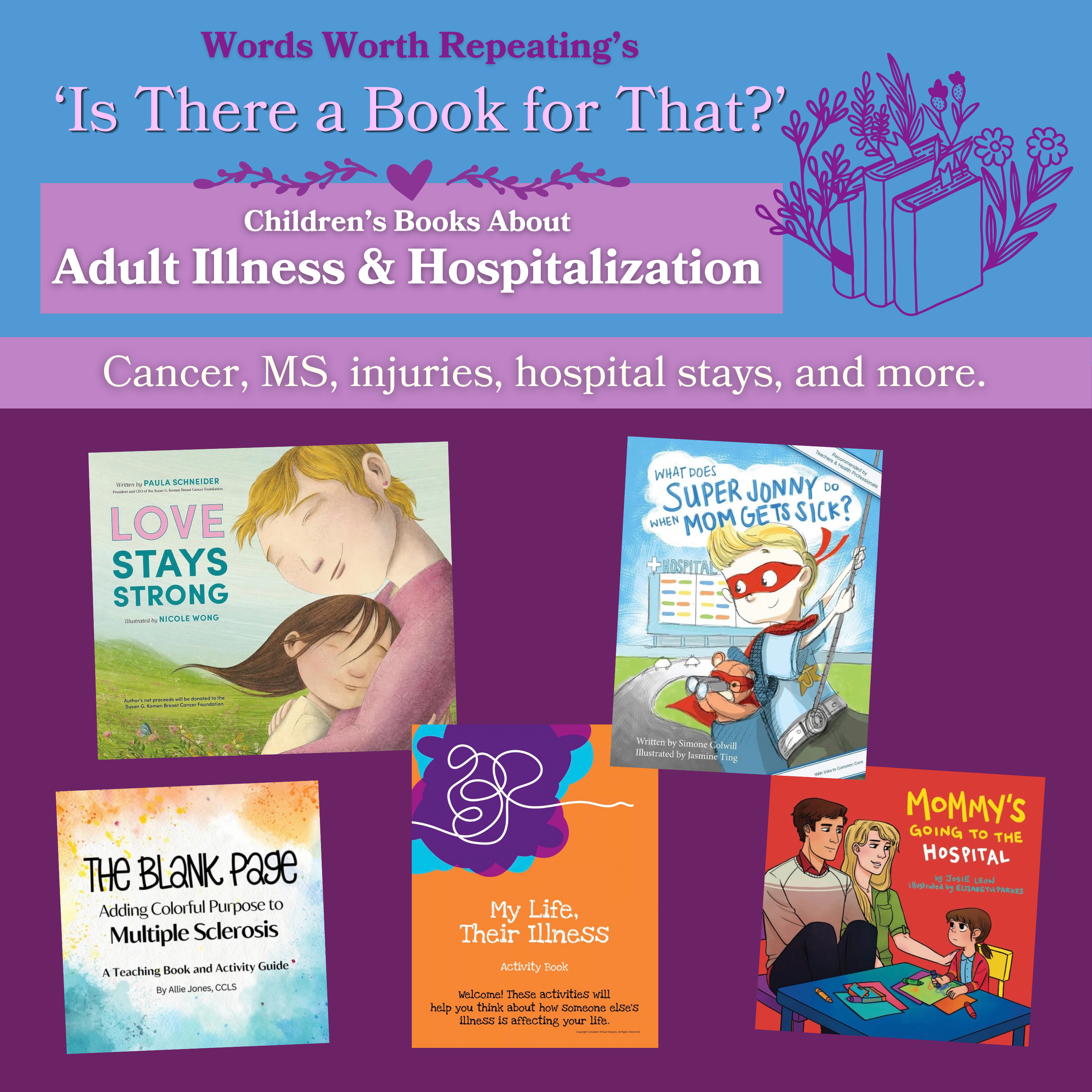
Oftentimes, adults are tempted to hide things like a loved one’s illness or hospitalization from the child. Adults worry that they might scare or worry a child, and sometimes, they reason that there is no reason for them to know. I would argue that there are many reason to be honest with children and that these books can help families find the words.
If you are trying to decide whether you should have a gentle, honest conversation about what is going on, here are some reasons to do it:
-Children listen. They will likely overhear a conversation or a comment that confuses them. If they find out that you didn’t tell them, this will impact their ability to trust you.
-They might come up with a different story - that’s worse. If their loved one is acting differently that usual or is gone for a period of time, children may come up with a story for why. They may assume that they or something that they did is the cause.
-Someone else might tell them and not have the full story.
-You establishing a standard within your family. By talking to a child about hard things, you are showing them that they can tell you things to and that as a family you will work through it together.
-You are normalizing hard days. People might be tempted to give kids a “rose-colored” version of the world, but eventually, they will be disappointed to learn that life has its bumps and challenges.
-Talking to kids about how medicine, doctors, and hospitals help people will encourage them to take care of their body and illnesses in the future.
-Kids learn coping skills from their loved ones. They learn about how to take care of the people they love, and they learn how to cope with pain, hard days, and more by watching others.
-You are giving the children an understanding that can help them process future events. If a loved one is seriously ill and eventually needs more care that you can’t hide or sadly, dies, kids will be able to understand more and process like the rest of the family if they are already on the journey together.
-You can give them a chance to ask questions. A child might have noticed things you haven’t or lack the foundation to understand certain aspects of care, by starting a gentle, honest conversation with them, they will have a chance to process with you their trusted adult.
I could go on and on, but you get the picture. Anyway, check out all of these books to see if there is one that is the right fit for you and be sure to go the blog search bar and look up some of the other children’s books that I have already shared about adult illness.
Love Stays Strong by Paula Schneider
This book is written as a message from a mom with breast cancer to her child. The book actually never mentions cancer or the treatments, so it could be used for other chronic illnesses as well. Please note that the illustrations do show the mom with no hair in a few, so that may not apply. Throughout the book, the mom compares the changes in nature to the changes their family is encountering. Some are harder than others, and some highlight the adaptability of the family unit. More than anything, the book focuses on the love in their family that only grows and stays present throughout all of the changes. While this book does not explain many details of the illness, it does encourage kids to ask questions and for caregivers to create an environment of inclusion and open communication. I highly recommend it for families going through an adult’s serious illness (especially cancer).
https://amzn.to/4iJG5Ve
Mommy’s Going to the Hospital by Josie Leon
This book is a simple story that addresses a child whose mom is going to the hospital. In this situation, the doctor finds a “boo-boo” deep inside the mom’s body. It shows the mom in the hospital and a bandage on her stomach. It talks about the feelings the child is likely having at home such as missing her mom, sad, and angry. It also talks about the mom needing more sleep to help her body heal. This book uses simple langage and the illustrations helpfully illustrate the experience. This book would be helpful to prepare a young child for a parent’s hospitalization and healing afterward, best for toddlers through preschool. A family may need to talk to them about differences that will be relevant to a small child in their specific situation.
https://amzn.to/3VJNaeF
What Does Super Jonny Do When Mom Gets Sick? By Simone Colwill
This book tells the story of a boy who loves to be a superhero, using super gadgets to help people. When his mom is in the hospital, Jonny offers many of his gadgets to different hospital staff who are helping his mom. This book introduces kids to a variety of professions that may be helping their adult in the hospital such as: doctor, nurse, x-ray tech, lab tech, and dietician. The hospital staff don’t use the items in the way Jonny thinks, but they end up helping them in other ways. Most importantly, Jonny learns that he helps his mom by giving her great hugs. The book's pictures show many common hospital experiences and could be a good conversation starter about the reader’s loved one and their hospital experience. Good for young children preschool through early elementary. This book has several variations for specific illnesses, I have not been able to access these titles and so I can not speak to their language or effectiveness.
https://amzn.to/4rs4Yqv
My Life, Their Illness Activity Book (kidsgrief.ca)
This is a workbook created for kids who have a loved one with an illness. The pages address what is going on with the adult, how the child is feeling, how the illness is affecting their relationship and more. The work book is quite lengthy (69 pages), but a parent, child life specialist, therapist, or counselor could pick and choose which pages are best for each situation/child. This book includes many activities, open-ended questions and visuals to help encourage gentle, honest conversations. An adult could even use the book to develop talking points when supporting a child.
This workbook can be downloaded for free at kidsgrief.ca
The Blank Page: Adding Colorful Purpose to Multiple Sclerosis by Allie Jones, CCLS
Written by a child life specialist, this book uses a book page as an analogy for a person, talking about the different emotions and experiences that make up the entire page. When the “page” gets Multiple Sclerosis, the teacher page teaches it more about MS. The book explains Multiple Sclerosis using an analogy of the brain being like a remote control and it sending messages with wires going to different parts of the body. The book explains lesions being like damaged wires, the concept of remission, the concept of relapses, and acknowledgement that MS can be very different for different people/pages. The book also talks about feelings they might have, while instilling hope. As a bonus, there are several hands-on activities on the last several pages. (Allie is always coming up with more diagnosis teaching books, you can find them at www.childlifetogo.com). Would be good for preschool through elementary. The book has so much content that it would most likely be better processed as parts. Also available in Spanish. The book does not address the idea of an adult having it and how that affects the children, but could definitely be used to help teach a child about a MS diagnosis. https://amzn.to/4ykGjqD
As always, I make a small commission if readers buy books through these links. This helps be justify the many hours I spend looking for the good books. I also encourage people to find this books at their public library or local bookstore, when possible.
