
Children's Books About Vaccines
* This image uses the old name of the ‘Is There a Book for That?’ blog/book list.
We've all heard recent conversation about vaccines, and let me tell you the kids are listening too. My own son had thoughts on the matter. After hearing some things he heard adults say, he had lots to say about the issue. On one side, he was upset that people were "lying about what vaccines do", but on the other side, he wondered if that meant he wouldn't have to experience shots anymore.
Since shots do hurt and many kids dread them, it is especially important to talk about the why. In addition, it can help to talk through coping options, putting the child in control of the choice making (with adult input!) I really suggest having these conversationgs long before or after a shot, so that a child can build an understanding without anxiety.
Negative medical experiences as a child lead to poor medical followthrough as adults. Helping kids understand the history and importance of vaccines is one part of helping your child grow into a healthy adult. There are a lot of books out there, and as always, different books will be good for different families. Read below to find one that is a good fit (and I would love to find more well-written about coping options and what helps - let me know if you know of some good ones!)
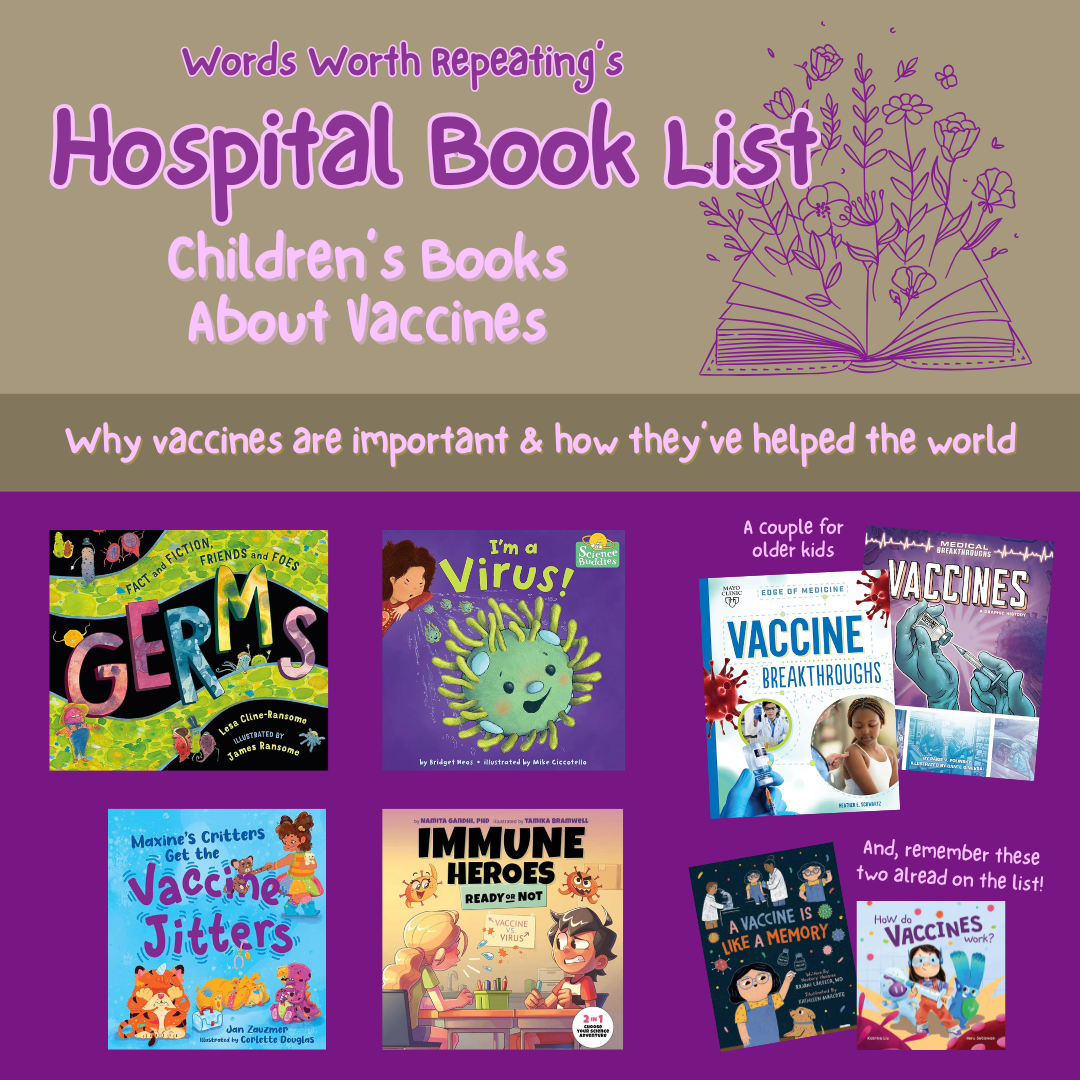
I’m a Virus! By Bridget Heos
This book explains viruses and how they make kids sick. The book uses simple descriptions and friendly drawings of cells to enhance understanding. After discussing viruses, the book then goes into vaccines, what viruses they have effectively stopped, and how they can make a difference and keep kids healthy. Immune systems are very complex, but this book makes them as simple as possible. There are some pages in the back that explain different parts of the immune system and what they do and a couple pages about smallpox and how vaccines were discovered and made a difference. This book would be good for early to middle elementary, but will be especially effective with caregivers clarifying and going over confusing concepts.
https://amzn.to/4r6NQ9j
Germs: Fact and Fiction, Friends and Foes by Lesa Cline-Ransome
This book is a more playful take on germs. The germ introduces himself and his friends as once being all over the world, but now having to war against vaccines and medicines. The book talks about the good and bad that germs can do. While the playful angle might be a little confusing for kids, it is colorful and engaging. An adult reader would likely be able to clarify and the combination of the book and continued conversation may help a child understand germs better. Good for elementary kids.
https://amzn.to/4nXGGRR
Maxine's Critters Get the Vaccine Jitters by Jan Zauzmer
As a child life specialist, I appreciate the way that this book promotes medical play. In the story, Maxine tells all of her stuffies that it is time for a shot. She tells them its okay to be nervous or to cry, but that it will keep them well. She and her dad, the “vet”, give them all shots, but the shots are no big deal. Then she goes to the doctor to get her very own vaccine. While the rhyming nature of the book isn’t exactly educational, I can definitely see a child wanting to line up their own stuffies to get shots afterward. If you have a young child who is getting a vaccine this could be a good activity for the morning before or for the days following, to work through what they experienced and why vaccines are important. Great for young children, probably 2-5.
https://amzn.to/4i2uo9y
Immune Heroes: Ready or Not by Namita Ghandi
This book tells the story of a boy who is hanging out with his sister when he finds out it is time for him to go get his vaccination. The book gives two outcomes. In one version, he chooses not to get his vaccination. He gets sick and the book shows what happens when the virus enters his body. Ultimately, he has to miss out on a fun birthday party because he’s sick. The book then shows the second outcome that happens when he gets his vaccination. It shows how his immune systerm keeps him healthy as the result of the vaccine. I think this could be a helpful viewpoint for school age children who don’t like shots, but are developmentally ready with the idea that sometimes we do hard things because they have a good outcome.
https://amzn.to/47KgtBE
Plus check out two other great Vaccine books shared with other books for the Pediatric Clinic (Blog from January 22, 2025) : A Vaccine is Like A Memory by Rajani Larocca, MD & How do Vaccines Work? By Katrina Liu
Vaccine Breakthroughs by Heather E. Schwartz
This book is more complex than the rest of the recommended reads, but I am including it because it covers a lot of the exciting research and science that has led to the success of vaccines. The book is easier to read than research articles and in 15-20 minutes can help older youth understand the importance of vaccine compliance in world health. The book discusses Covid-19, mRNA, smallbox, combining vaccines, non-needle methods, HPV, and an interview with a scientist who works on vaccines. This book would be better for middle school and high schoolers.
https://amzn.to/4peRR9Z
Vaccines: A Graphic History by Paige V Polinsky
This is another book that would be good for a pre-teen or teen questioning the need for vaccines or who is just interested in science. It covers multiple different vaccines through history and the people that started questioning vaccines after a study linked vaccines with autism. The book is factual, but easier to digest in graphic novel form. The book is still fairly complicated though and so I would not recommend it for elementary kids, but rather middle school and high schoolers.
https://amzn.to/4o62NWy
(I am adding links to all of the books to help you all easily find and purchase. I do receive a small commission, but it doesn't cost you any more and it doesn't take anything away from the author. It's just Amazon that makes a little less per purchase. :) This helps me justify spending time in my week finding more great books for you!)
