
Children's Books About Epilepsy
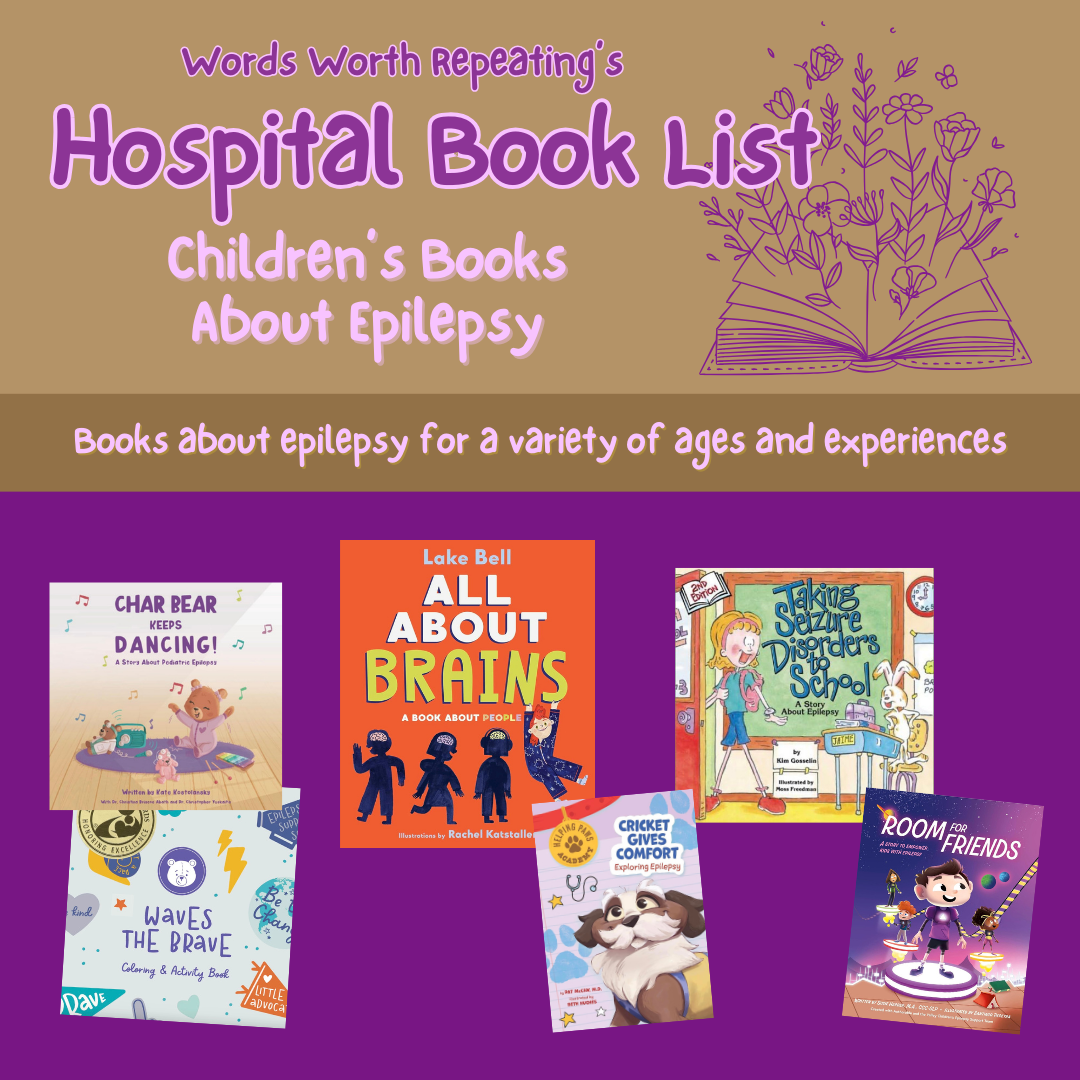
I was happy to find a variety of books about his topic. There is a little something for everyone and even a few more that I couldn't get my hands on, but hope to share soon. Read below to figure out which is the best fit for your family, or if you work in a neurology clinic, grab them all!
O and a quick reminder, these are not the first neurology books that I have shared. There were several great books about the brain and brain injury that you can find in my June 18 blog. :)
(I am adding links to all of the books to help you all easily find and purchase. I do receive a small commission, but it doesn't cost you any more and it doesn't take anything away from the author. It's just Amazon that makes a little less per purchase. :) This helps me justify spending time in my week finding more great books for you!)
All About Brains: A Book About People by Lake Bell
This book tells the story of Nova, a girl with epilepsy. The book shows her interaction with her brother, her mother, and her class. Nova shares with her class that she has epilepsy. She describes it as “sparkles” in her brain that can cause seizures. She explains seizures in a way that is easy for kids to understand. The book shows her taking medicine for epilepsy as well. Then the rest of her class starts to share the different things that make their brains all different including dyslexia, ADHD, autism, anxiety, and OCD. Each child explains their neurodiversity in words that are easy to understand and talk about a famous person that also have similar differences. The book promotes inclusivity and normalizes talking about differences. It is also educational and includes well-written descriptions. This book would be good for all elementary school kids.
https://amzn.to/4o28gO2
Taking Seizure Disorders to School by Kate Gosselin
This book is written from the perspective of a school-aged girl with Epilepsy. She is explaining to her class the things that they might see her do because of her Epilepsy, as well as supportive phrases such as “I just need more time” and “you can still be my friend”. The book does a good job keeping things simple and includes tips for teachers in the back. Good for young children through middle elementary.
https://amzn.to/47OLEM4
Char Bear Keeps Dancing! : A Story About Pediatric Epilepsy
If you have a young child with epilepsy, you should check out the Brave Bears Club. They have written this sweet book and are working on more resources to support the epilepsy community. This specific book is about a young bear who loves to dance, but sometimes experiences times when her body moves and she’s not trying to move it. When her parents take her to the doctor, they all discover that these movements are seizures, and she has epilepsy. The book talks about her getting an EEG with her teddy bear in tow. (The Brave Bears Club also sells teddy bears with the EEG headgear) The book describes brain waves and gives a simple description of epilepsy and seizures. This book is great for young children. I would say it would be great for 2-7 years who have epilepsy or know someone who is.
The book also has an accompanying coloring book titled Waves the Brave - Coloring and Activity Book. The book is filled out with easy to tear out pages and cute designs. A few of the pages educate and then there are pages for each role such as supporter, sibling, Keto kid, having a VNS, etc. I could see how this book could be helpful for a neurology clinic, as they could have something for everyone.
https://amzn.to/3JQ4Wrj
Cricket Gives Comfort: Exploring Epilepsy by Pat McCaw (WDM)
This book tells the story of a pet therapy dog who visits the hospital with his child life specialist. In this book, they visit a 9 year old boy who has epilepsy. He is at the hospital because he is experiencing an increase in seizures. Cricket helps him rest after a seizure, plays basketball with him to feel better about missing practice, and helps him through an EEG, blood draw, and a MRI. While this book engages children with a fun storyline, the book also educates and normalizes. The boy experiences things like urination during his seizure and an increase in seizures because he has gotten bigger and needs more meds. I highly recommend for kids who have epilepsy or know someone with epilepsy. It is a children’s chapter book, but could be read aloud for kindergarten through upper elementary.
https://amzn.to/49WtmKa
Room for Friends: A Story to Empower Kids with Epilepsy by Susie Harder, Santiago Pereyra, Michal Leah, Lucy Kane
This book is written for school aged children to use as a way to talk to their peers about epilepsy. There are fill-in-the-blank areas where kids can fill in details about their seizures and how they feel. The rest of the book tells the story of a boy with epilepsy who is in an escape room. The clues to get out are all linked to epilepsy. I can see that this point of view is meant to connect with older school-aged kids. The story got a little hard for me to follow, but it did emphasize important general concepts such as being kind, checking on friends, and being open to learning more. This book could be useful for a middle to upper elementary school student with epilepsy or for a classroom trying to be supportive to a student with epilepsy.
