
Children’s Books About Allergies and Immunology
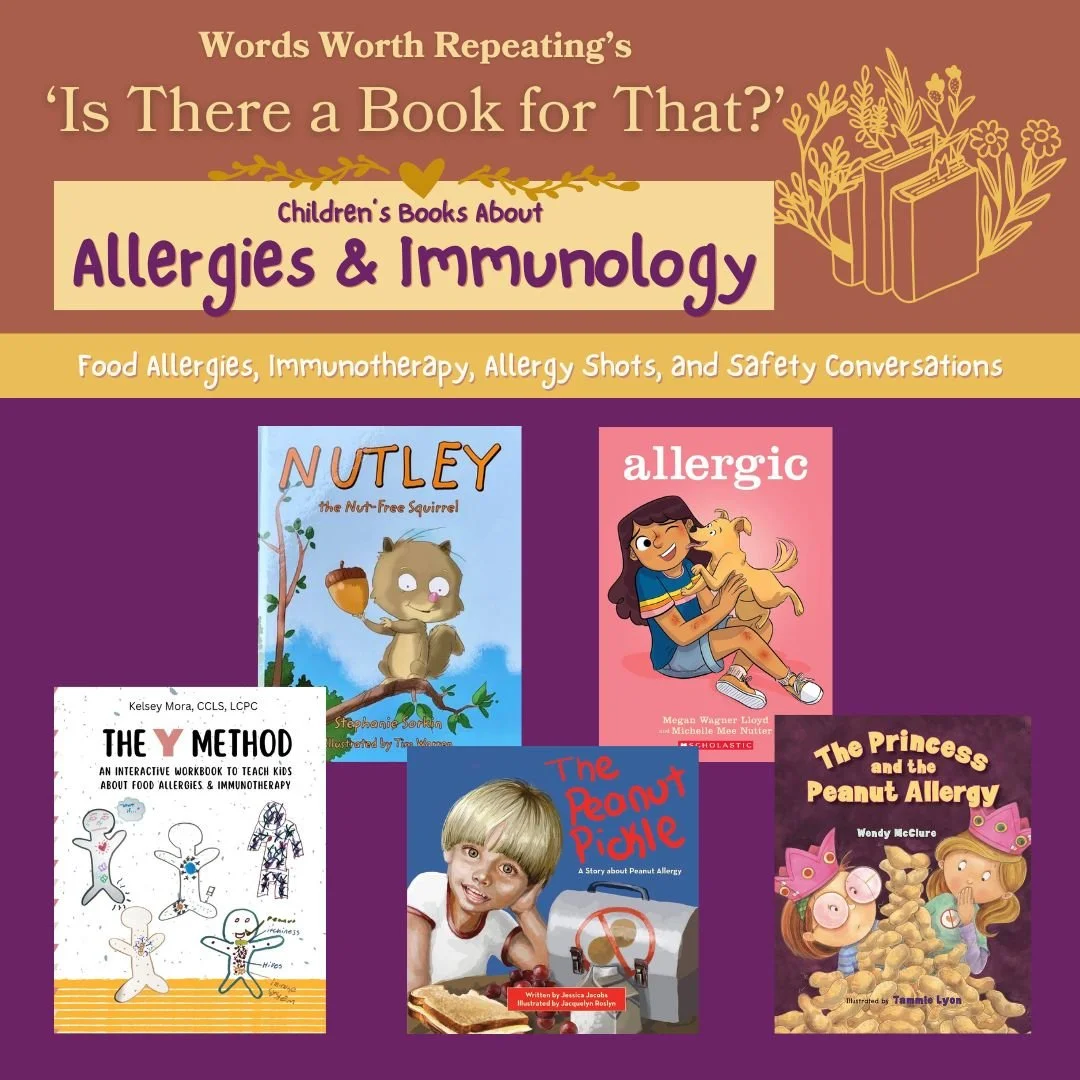
Allergies can be especially stressful for children, as they have to make hard choices and miss out on tempting things, in order to keep their bodies safe. In addition, it can be important for all of the people in their life to understand how important avoiding the allergen is. Children’s books can be an important tool as they can remind children of the importance, help them feel left alone, and educate their peers. Because of this there are a lot of books out there, but they aren’t all great. I hope my recommendations and descriptions help you find what you are looking for.
As treatments continue to evolve, I expect there to be more books written about immunology, but I am happy to share a couple today. I have previously shared more books about food allergies. You can find them by typing ‘allergies’ in the blog search bar. Don’t hesitate to let me know if you would suggest additional titles, as I would be happy to share them in the future. As always, I do receive a small commission when readers buy books through these links. No extra price for you - it just helps me justify doing the research for this blog.
The Y Method by Kelsey Mora
Written by a child life specialist and therapist, this workbook helps kids understand what happens in their body that makes them allergic to a food. The book helps kids express their understanding of their own experiences. The book also addresses what happens within the body that causes an allergic reaction (explained with body outlines and symbols that the reader can create). The book also addresses anxiety that is common when kids start trying immunotherapy. It suggests ways a child can cope with their anxiety and help distinguish between an actual reaction and anxiety. The book includes a “poke plan” at the end of the book to give kids a sense of control and to help communicate preferences to the care team. While it could be simplified for young kids with questions, I can see this book being most helpful for school-age children through teens. Unlike most other allergy books, this book focuses more on the why and how to cope with possible treatments.
https://amzn.to/4sn9V3h
Allergic by Megan Wagner Lloyd
This is a graphic novel about a 5th grade girl. She is allergic to animals with fur and feathers which is especially stressful, as she had really wanted a puppy. This story includes aspects of school, her family life, and a new friendship with a neighbor. Different parts of the allergy experience are included throughout the book including: feeling isolated, a friend with a food allergy, temptation to be around an allergen, potential reactions, allergy testing, allergy shots, deep breaths to help with shots, allergy-related anxiety, and the stress navigating allergies can have on a friendship. This book is great for middle elementary through middle school. While the book only covers one child’s specific experience (which could be different than the readers), the book is still very helpful in helping kids feel less alone and to start conversations about how the reader’s experiences are the same or different.It honestly would be a good book for any child, but especially relatable to children with allergies or children who have a friend/family member with allergies.
https://amzn.to/4rJk0Yk
Nutley, the Nut-Free Squirrel by Stephanie Sorkin
This is a playful book about a squirrel who is allergic to nuts. He finds out when he gets hives one day. He soon learns that many of his animal friends have allergies to things that they are supposed to like. They talk about what their favorite snacks are and agree to be mindful when spending time together. There isn’t a lot of medical content in this book, but it is a good book for young children/classrooms to make a child feel less alone and normalize food allergies. Good for young children through early elementary.
https://amzn.to/4aOY4oP
The Princess and the Peanut Allergy by Wendy McClure
This is a story of two school-aged girls who are best friends. One is having a princess birthday party that they are both excited about. When she is sharing plans, she learns that her cake plans won’t work for her friend with a peanut allergy. Initially, they get in a fight, but the adults in their life help them think a little bit. They discover that they can make the cake without the peanuts, and all is good. This book is another story that is good for normalizing and teaching friends/classrooms to be mindful of what their friends need to be safe. Good for young children through young elementary.
https://amzn.to/3Pg9olh
The Peanut Pickle by Jessica Jacobs
This book is about a young boy with a peanut allergy. The book takes the reader through many different scenarios where the boy encounters peanuts. The book demonstrates how the boy handles these scenarios to stay safe. The book offers a wide variety of ways he can handle it based on the specifics in the situation. The book acknowledges his feelings when he has to miss out on something fun, but mostly it offers repetition and simple words that can resonate with young children. This book could be helpful to work with a young child who is learning how to navigate their new allergy and stay safe when they will be away from a parent, even when it isn’t the most fun decision. It could also be helpful in a classroom that contains a peanut allergy. This book does not explain allergy or the medical care involved, instead focusing on the important behaviors and variety of situations a child can encounter. Appropriate for young children through early elementary.
https://amzn.to/4aNvJ2a
March is Child Life Month, and so I am picking book topics in order to highlight some new books written by child life specialists! I believe that child life specialist are uniquely positioned to be great children’s health authors, and so I am happy to share their work! If you’d like to find more books written by child life specialists, type it into the blog search and should bring up several more.
