
Children’s Book That Promote ‘Playing Doctor’
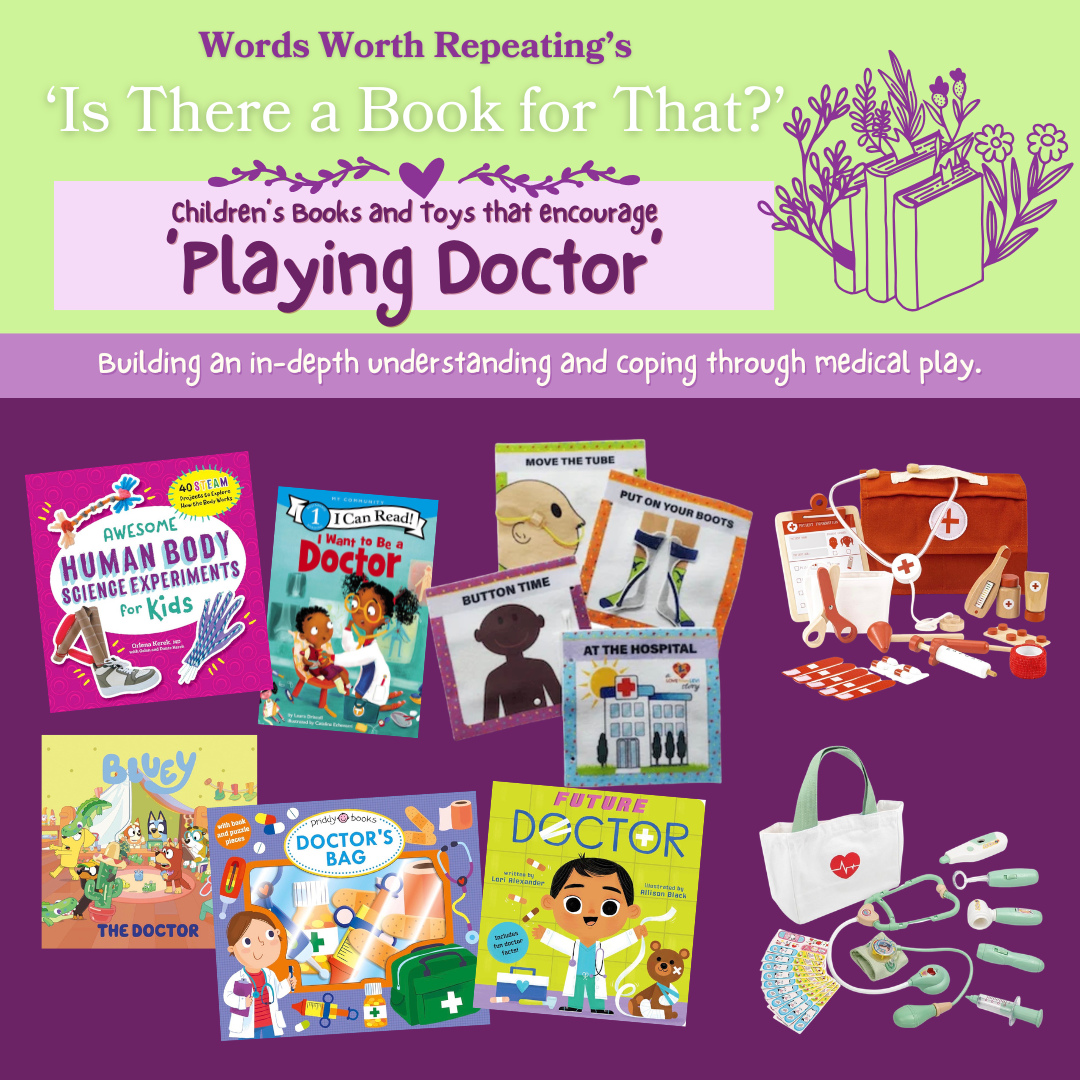
Medical Play = one of the best things a child can do to build an understanding of their own body, what medical staff does, and ways they can cope with these experiences.
Since National Doctor’s Day was this week, I thought it was a great time for books that teach kids more about doctors by encouraging them to pretend to be one or to think scientifically like they do. I am including a great FREE customizable book, books that encourage play in different ways (because different kids need different things!), and some toys that pair so well with them. As always, I get a small commission from purchases which helps me justify all of the hours I spent creating this… heads up, there are a LOT of bad doctor book out there.
Love From Levi
This non-profit is creating customized hands on books that help kids play through what they are experiencing. Families can go to their website and request a book. The book will be made of fabric (like the old school “busy books”) and each page will be a different aspect of their care. The page doesn’t include many words, but instead has a ‘medical play’ version of the experience that the kids can interact with. The books come with a few standard pages that apply to most kids including washing hands, putting on mask, oxygen check, temperature, stethoscope, and blood pressure. Then families can select what additional procedures they want to add, and they have a long list! Blood draws, cochlear implants, trach, wheelchair, leg braces, chemo etc! Learn more and order a book here: https://lovefromlevi.com/Like I mentioned, Love From Levi books are free, and they do produce books based on volunteer workers and donations. If your family isn’t experiencing overwhelming medical bills and has the means, consider donating along with your order.
Future Doctor by Lori Alexander
This book uses simple text to talk about what doctors do and how a baby (or a child) can mimic them. It promotes medical play and pretending to be a doctor. Medical play is an important way that kids understand and cope with experiences such as a doctor’s visit or hospitalization. The illustrations and last couple of pages include a lot of added details beyond the typical “going for a check up” book. These details could enhance a child’s medical play and help them find more aspects of doctors to mimic such as gloves, microscopes, types of doctoring (heart, eye, brain, etc), working with a team, helping injuries, etc. All in all this would be a great book to gift with a doctor set and encourage future medical play and future understanding/coping. Great for babies through young elementary. https://amzn.to/4srejOx
Bluey: The Doctor
This book is another great way to encourage medical play. Those familiar with Bluey and Bingo know that they have great imaginative play, and in this book, their friends are coming up with crazy things that need to be solved. While the book doesn’t do much for medical attention, I appreciate the fun and silliness it promotes. If your child is struggling with doctors appointments or medical experiences, read this book with them and then initiate some medical play. While you can start with coming up with silly illnesses, the play can ultimately end up covering some experiences that your child needs to work through or practice coping with, like shots, throat swabs or other things. Great for young children.
https://amzn.to/3PTcLir
Let’s Pretend: Doctor’s Bag by Priddy Books
The book has a variety of cut-outs of tools in the doctor’s bag. The book gives a few different scenarios and the child can find the items needed for the scenario. The book also includes a short one-sentence description of each tool. Making young children familiar with medical devices is a part of helping them feel comfortable at the hospital and keeping kids actively engaged. Whether prior to a doctor's visit or following, an adult can talk through the things that doctors do and the tools that the child experienced. The text of the book is pretty simple, but the adult reading the book can help a child understand by continuing play with the medical tools and using questions like “Will this hurt, doctor?”, “Does your patient need to hold still?”, “Can you count to three so your patient knows the shot is coming?”, “Does your patient want his momma to kiss it now that it’s done?”, etc! This book is a great hands-on way to do that. Good for 2-5 year olds.
https://amzn.to/3NTLH24
I Want to Be a Doctor by Laura Driscoll
At first, I avoided this book as so many “easy reader’ books lack a lot of substance and are more for new readers to practice. This is an exception. While being easy to read, this book tells a well-written, easy-to-understand story of a young girl visiting the hospital with her brother and parents. She meets various kinds of doctors and learns about their jobs. This can help kids grow their understanding of medical care beyond check-ups and first experiences. For kids who are dealing with hospitalization, it can help open conversations up to different specialists and types of hospital staff. For kids who enjoy medical play, it can help create new types of play and jobs that doctors undertake. Good for preschool through early elementary (4-8 year olds).
https://amzn.to/4dQPKXq
Awesome Human Body Science Experiments for Kids by Dr. Orlena Kerek
This book starts with an in-depth explanation of multiple body systems. These explanations are written with simple language and give families a base to understand many medical words and processes. Then it gets to the really good stuff. This book contains 40 experiments that kids can do to learn more about how their body works. Many of them require minor adult support, but they get into some really interesting stuff. This book could be super helpful in getting kids to connect and understand what is going on in their own bodies or the bodies of their loved ones. By buidling an understanding, they become an active member of their own health care team This book could also be a great resource for a child life specialist or teacher wanting to explain something in a new way or engage kids with a hands-on activity. Most of the experiments use typical household supplies and adults and kids will learn new thing. Appropriate for elementary through high school kids.
https://amzn.to/41EXtk1
Finally, although I typically focus on books as important tools to support family conversations and to build kids’ coping skills, I couldn’t finish a list of books that promote medical play without sharing some of my favorite medical play toys.
If a child in your life is struggling with doctor’s visits or ongoing care, my first recommendation will always be opportunities to play through it. Having some of the common tools they will see and interact with puts kids in control and gives them an opportunity to play through the why and the how. I am sharing some great kits to have in your home. If they don’t include an item that is important in your child’s care, work with your child to build one yourself (you can build almost anything from pipe cleaners) or use a toy as a substitute. Kids love being creative and using their imagination.
I love this doctor’s kit because the items work (otoscope and flashlight light up, digital display on thermometer, stethoscope makes sounds) and the batteries are included!
Made out of recycled plastic. Includes some sticker band-aids (kids love band-aids!). Plus, super affordable. https://amzn.to/48aVDLp
One more great doctor’s kit provided by a small family-owned business. Super cute -Items are made of wood, plus reusable velcro band-aids. Packets of pills created of wood are great for conversations with your kids about medicine and medicine safety.
