
Books About Autism
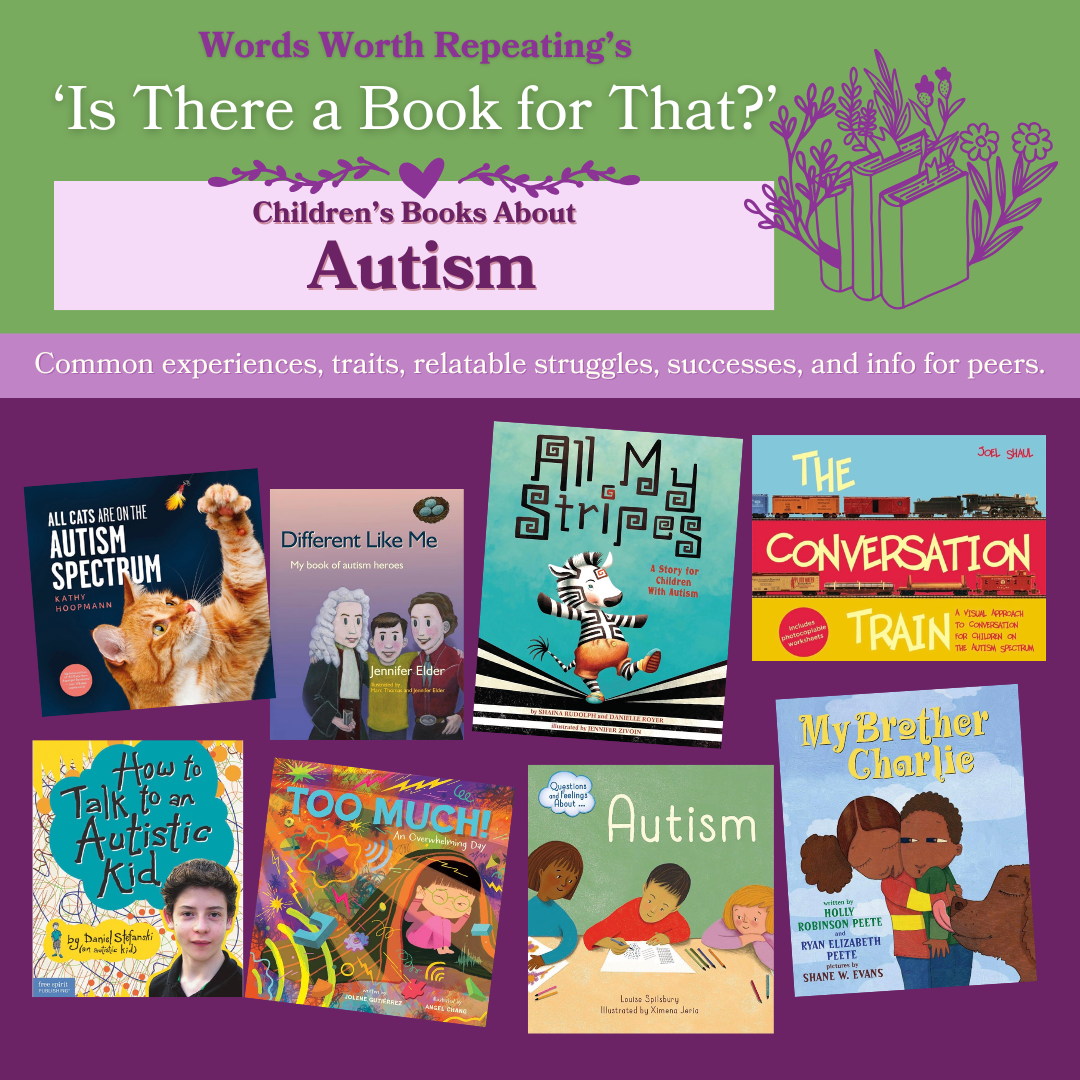
All kids are different, and all kids need different things. As a family navigates the world with autism, their needs will change. Sometimes they will need understanding and to feel like they aren’t alone. Sometimes, they will need tips about how to learn a skill that comes easily to others or new ways to regulate. Sometimes, they will need the world around them to understand and to be kind. These books are a sample of all of them, and good news - there are even more that I didn’t even get to this week. I was excited to find a lot of books about autism. No, they weren’t all great, but actually, there were quite a few helpful ones. I will likely share more autism books in the future (so if you have a favorite that didn’t make this list, be sure to let me know!)
Anyway, read below to find what each of these books offers to autism families or to people in their world. As always, I make a small commission if people puchase books through some of the links below. This helps me justify all of the time I spend reading and writing about books!
Different Like Me: My book of autism heroes by Jennifer Elder
This book doesn’t use the word autism except on the cover. Instead a variety of famous and unique scientists, arts, musicians, etc. are highlighted. Each page tells the story of the person including what made them special, what they were good at, and some struggles that they had in their life that might be relatable for people with autism. The book avoids diagnosing anyone, but instead shares stories of people who were unique and because of their uniqueness, they made a difference in the world. The very last page mentions that none of these people let people make them feel bad about who they were, and that it’s okay not to know what you will do with your life, but to just commit to doing it your own way. This book could be important for a variety of kids, those being bullied, those who feel different from others, or conversely, those who aren’t kind to people different from themselves. This book may prompt further conversations about autism and how it relates to these special people. It may partner well with additional books with more explanations of what autism is and how it affects people. This book would be appropriate for elementary and middle school aged kids.
https://amzn.to/4cUeAVr
The Conversation Train: A Visual Approach to Conversation for Children on the Autism Spectrum by Joel Shaul
Again, this book doesn’t talk about autism itself, but instead it is a guide that adults can use with children to help them learn about how to have a conversation. This can be a hard skill for people with autism. The book relates different parts of the conversation to different parts of the train. The book also focuses on staying on a topic or switching topics together. This could be especially important for kids who love talking about a couple of favorites and have trouble understanding the social cues when their peers no longer want to talk about that subject. This book includes lots of opportunities for the child to practice which increases the possibility that the information sinks in and the child learns new skills. I appreciate that the book didn’t get too wordy with why conversations are hard, but instead wrote it like a manual that any person could use when learning about how to have a conversation. This book would be good for school age kids or potentially older in the autism population.
https://amzn.to/4cuSlnu
All Cats Are on the Autism Spectrum by Kathy Hoopmann
This book uses cute pictures of cats to engage the reader and relate to the text. The text talks about many aspects of being on the autism spectrum. The book speaks in a positive tone and speaks in a way that embraces a variety of experiences and feelings - not lumping the autism community into one collective way of being. I appreciate that the text is written with simple words and with relatable reactions. The book does not dive into why, but instead helps the autistic individual feel seen and helps all readers understand more of the autistic experience. This book is a conversation starter. It will not answer every ‘kid question’ about autism, but it will encourage kids to be curious and empathetic. I recommend it for elementary school kids and even older - who doesn’t love a great cat pic? For your little literal thinkers, you may need to explain the ways cat act can look like autistic traits, but that cats aren’t diagnosed with autism. :)
https://amzn.to/4vPybhc
Questions and Feelings About Autism by Louise Spilsbury
This is a factual book written to explain autism and how it can present in words that kids can understand. The book is simple and explains that “autism affects the way the brain works” and that each child can be affected in different ways. The book explains things that might be hard for an autistic individual and then ways they can adjust and things that might feel better for them. This book could be useful for young school age kids who may interact with autistic individuals or to help an autistic child feel understood and find ways to make choices that feel good. Generally the book encourages kids to find things they can do that feel good for everyone and to embrace differences. The book ends with notes for caregivers that encourage honest conversations about differences and autism and some group activities that teachers or group leaders could do to help kids relate.
https://amzn.to/4tTse0A
How to Talk to an Autistic Kid by Daniel Stefanski (an autistic kid)
This book is written about a teenager with autism. He explains about how he has a couple of friends that he had fun with, but that other kids don’t talk to him. This makes him feel lonely. It talks about a variety of situations and how older kids and teens can handle them including social cues, initiating conversations, what people can do if an autistic person gets stuck on one thing, hanging out and common interests, sharing, embracing differences, sensitivities, etc. This book has longer explanations than the other books shared prior and would be a little long for young elementary students. For older kids, I think there is value from hearing from an autistic kid’s experience. A sibling of an autistic kid might want to share it with their peers, or it could be shared in a classroom of older kids who might feel awkward and avoid kids who seem “different” without some clear guidance.
I found some affordable used (good condition) copies here:https://amzn.to/4tsI6YlAnd lots of libraries carry it. Unfortunately, I am having trouble finding it new.
My Brother Charlie by Holly Robinson Peete and Ryan Elizabeth Peete
This story is told from the perspective of Callie, the twin sister of Charlie. Charlie has autism. The book talks about what Charlie was like when he was young, hearing hard predictions from doctors, finding ways to connect and experiencing some of the limitations and behaviors of Charlie that are hard to be around. I love that the book is written from a siblings’ perspective, and that the book focuses on both the things that are hard and the love that exists between them. I think this would be a great conversation starter for any family with autism and could be helpful for peers that interact with their family - as it helps people understand, but also be sympathetic to all the feelings that come with having an autistic sibling. Good for preschool through middle elementary- aged kids.
https://amzn.to/41KaE3p
All My Stripes: A Story for Children with Autism by Shaina Rudolf and Danielle Royer
This book tells the story of Zane, a young zebra. It first shows Zane struggling at school. The zebra interprets assignments differently and has trouble joining in conversations. The other zebras make comments that make him feel like they only notice his “autism stripe” and that makes him different from the rest. His mom shares many of the other “stripes” that make Zane special. This book could be especially helpful to encourage conversations between adults and kids about all of the things that make them special instead of focusing on the parts that are frustrating or challenging. This book could also be useful to help a classroom/peers see that everyone has lots of things that make them special and to encourage them to not just focus on the negative. Good for preschool through young elementary.
https://amzn.to/4cn8mNN
Too Much! - An Overwhelming Day by Jolene Gutierrez
This book tells the simple story of a girl who wakes up in the morning. She is overstimulated by her clothes, the amount of light, her breakfast, etc. Eventually she gets to school and someone hugs her on the playground. It is too much. She is overwhelmed and her mom takes her home. Her mom knows exactly what she needs dark, personal space, etc. Then her mom practices with her saying what she needs to practice advocating for herself in the future. I think this is a really important conversation for adults to have with any child who struggles with sensory overload. I also think this book could be especially helpful when an autistic child or a high-sensory child is the hospital, as it could be an important way to talk about what is calming and what helps when there are so many sensory stressors. Good for young children through elementary.
https://amzn.to/4dYJq0e
