
Children’s Books About Specific Genetic Disorders
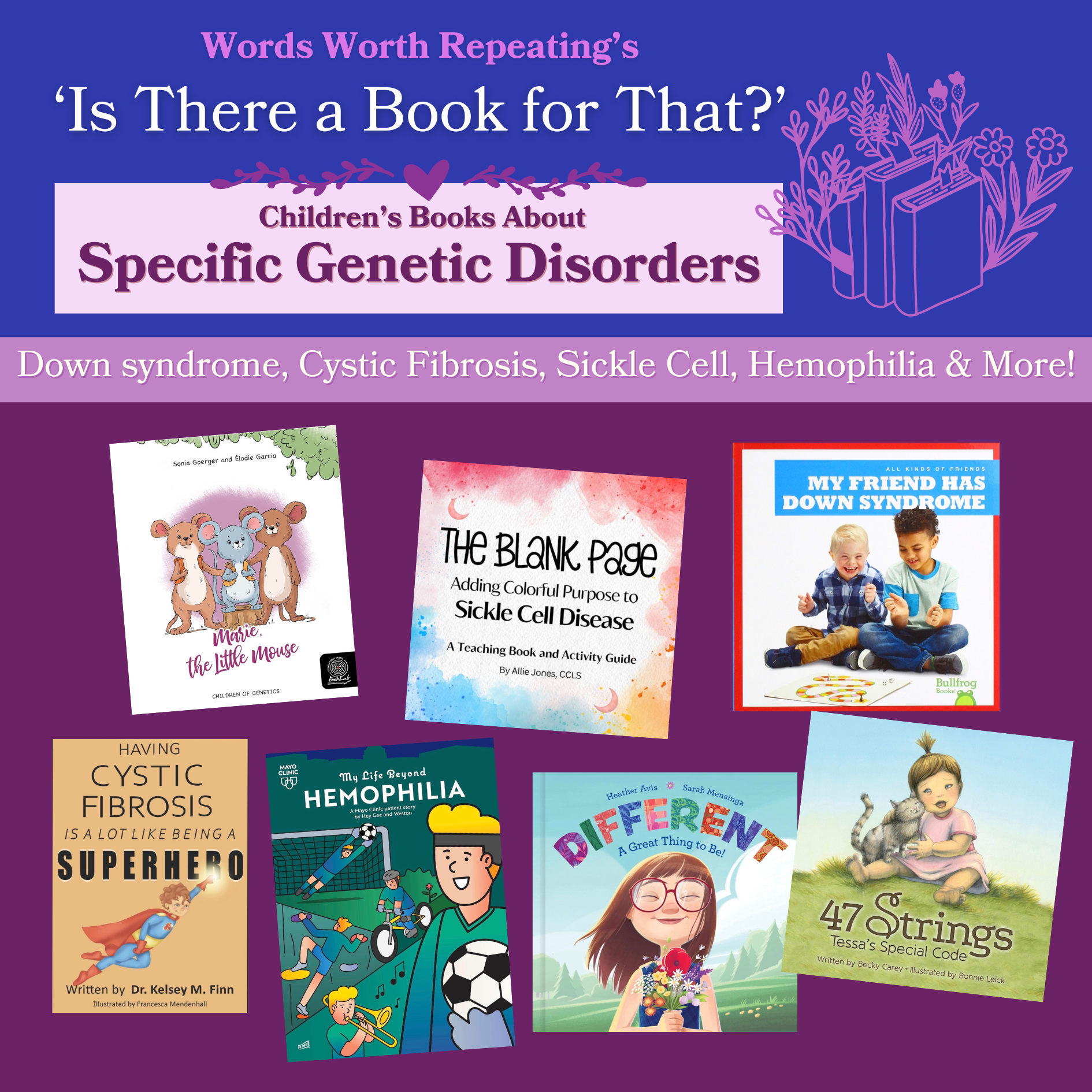
When a child is born with a genetic disorder, there will be many conversations throughout their life. Conversations with them as they grow, conversations with their siblings, conversations with their classmates and teachers, etc. Sometimes, having some well-written children’s books can support those conversations by providing age-appropriate information and illustrations that explain and encourage kindness. Last week, I shared some books that can help explain the “why” part of genetics. This week I am sharing some books that talk about specific genetic disorders. Both can be important additions to your home/school/hospital libraries.
As always, I make a small commission on purchases through links. This is a great way you can support my efforts to always bring you quality children’s literature about needed topics. Of course, I also encourage purchasing the books at a local bookstore or finding them in your library.
Marie, the Little Mouse by Sonia Goerger
This is a story of a mouse that was much smaller than the rest of the mice. She is smart and loves school, but deals with peers who aren’t nice. Her mother gives her words of encouragement that help her ignore the bullies (who then feel bad) and empower her to grow to be a geneticist. The book is a simple story that doesn’t get into medical details so it would be appropriate for any child who is small, no matter the genetics behind it. It was written to support kids with Achondroplasia and has a short paragraph for adults about the prominence and effects of the genetic condition. Good for young children through early elementary.
Available for free digital download here: https://amzn.to/4oxx6qL
Or here: https://www.fondation-ipsen.org/book-lab/marie-the-little-mouse/
Having Cystic Fibrosis Is A Lot Like Being A Super Hero by Dr. Kelsey M. Finn
This book was written to help families have their first conversations about CF with their kids. At the end the author encourages parents to have honest conversations with their children (supported by research)- which I love! The story is told by a young boy who has CF. He gives simple explanations of common aspects of CF care and experiences like mucus, genes, nebulizer treatments, vest treatments, g-tube, enzymes, exercise, and going to the doctor more. He feels like a superhero when he is taking care of his body. The book encourages the child reading the book to ask questions and express how they are feeling. If a family isn’t sure how to build their child’s understanding of CF, this is a first step. Good for young children. In the version I read via Kindle Unlimited, there were a few punctuation errors, but that can sometimes happen in virtual versions. I decided to share the book regardless, as there are multiple benefits to young CF families.
https://amzn.to/3SfVrFC
The Blank Page: Adding Colorful Purpose to Sickle Cell Disease by Allie Jones
This book was written by a fellow child life specialist author. The book uses a page of a book as an analogy for a person, talking about the different emotions and experiences that make up the entire page. When the “page” gets Sickle Cell Disease, the teacher page teaches it more about Sickle Cell. The book explains Sickle Cell in a way that kids can understand explaining what red blood cells are and likening their role as being like a mail deliverer traveling through round tunnels. Then the teacher page explains the sickle shaped cells and the struggles they cause. After explaining, the book talks about feelings they might have and ways they can keep their body to feel better. As a bonus, there are several hands-on activities on the last several pages. (Allie is always coming up with more diagnosis teaching books, you can find them at www.childlifetogo.com). Would be good for preschool through elementary.
Also available on Amazon here: https://amzn.to/4uJpgvZ
My Life Beyond Hemophilia by Guillaume Federighi AKA Hey Gee
This book is about a boy who loves to be active and play soccer and who also has hemophilia. The book explains hemophilia with simple words and illustrations that make it easy to understand. It also talks about how the boy and his family cares for his body, including treatments and precautions. The book could be an important resource for a classroom or team who have questions or concerns about a teammate. The book could also be used to empower a child with Hemophilia and encourage compliance and care. This book is good for school aged kids. https://amzn.to/4eoDxrG
My Friend Has Down Syndrome by Bull Frog Books
This book introduces the readers to a variety of kids with Down Syndrome. The book is short and simple and touches on several common differences in a way that allows for diverse experiences and builds on unity and understanding. Good for young children through young elementary.
https://amzn.to/4uHSV8M
47 Strings: Tessa’s Special Code by Becky Carey
This book addresses the older brother of a young girl with Down syndrome. The book reminds him of how special and cute she is. It also explains that she has Down syndrome and explains that the code that makes her who she is has 47 strings instead of 46. The book uses simple language to help kids understand. If a child has more questions about genetics, you may want to use some of the books I shared last week that go more in depth. The book also mentions a few things that his sister might need more help with and all of the exciting things she’ll do. It does mention to him that he can help her by helping if people are mean and don’t understand. This could be a great book for kids who have a new baby born with Down syndrome, but could be used for any child building an understanding of differences. Good for preschool through young elementary.
https://amzn.to/4vTUgKq
Different: A Great Thing to Be! By Heather Avis
This book talks about a girl named Macy. There are lots of ways she is like other kids, but there are a few things that make her different. The book doesn’t label the cause of the differences, but just talks about being Different and how Macy takes that on. The book seems to be inspired by a child with Down’s Syndrome, but the book doesn’t label that and so the book could be a positive way to talk to any child about differences. This book is good for preschool through young elementary school.
https://amzn.to/4uG3MQk
