
Children’s Books About Medical Tubes and Openings
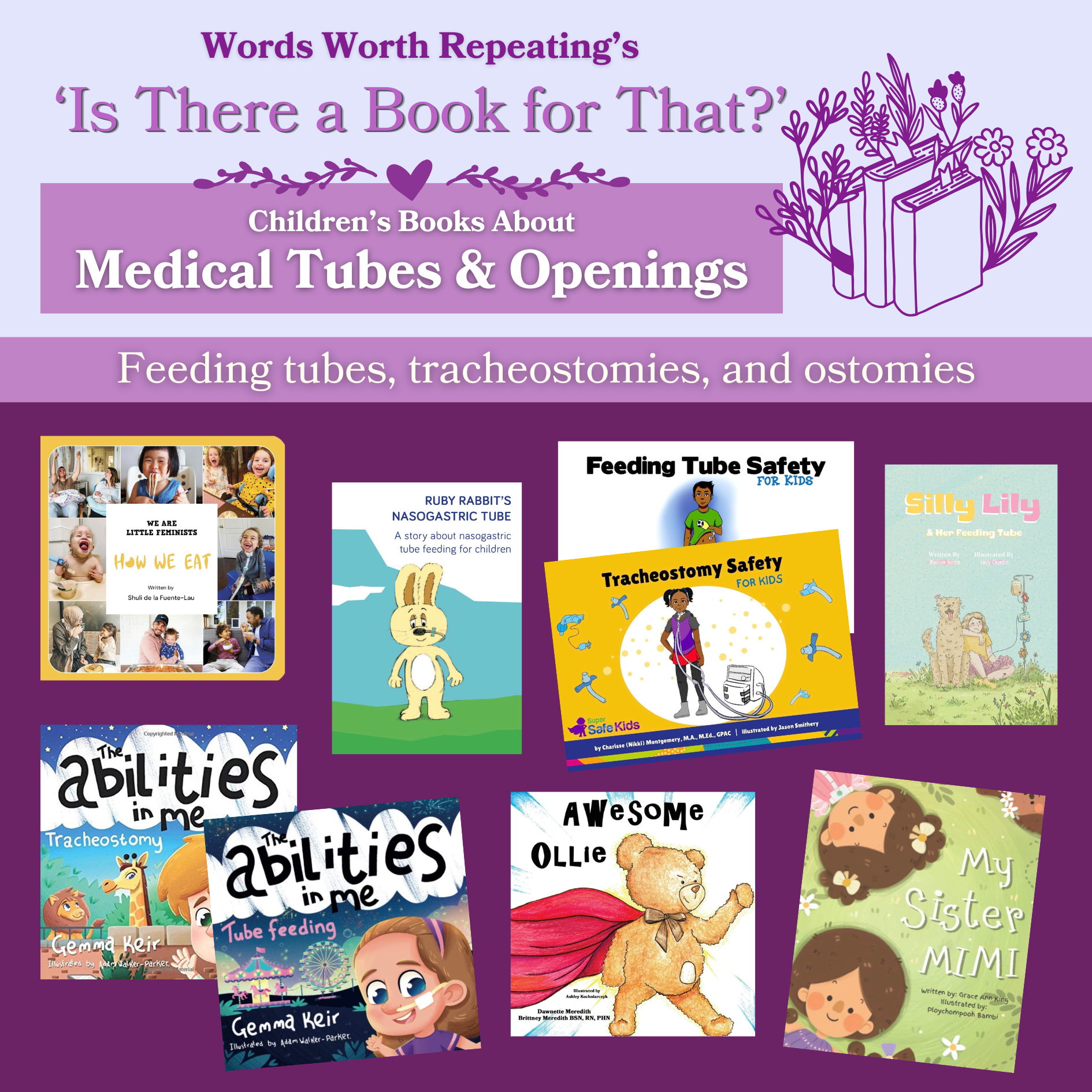
Recently, I had a child life specialist reach out and ask for a children’s book to help siblings when their baby comes from the hospital. Specifically, she was looking for a tool to prepare and educate the sibling about the g tube, trach, oxygen tubing, etc. After my years in the NICU creating customized books for siblings, I felt like I might be able to create something special for this purpose, but before I start creating myself, I wanted to do a deep dive into what already exists. I am sharing that deep dive today with you. I hope it saves you the hours of skimming through AI garbage, books filled with complicated medical jargon, and finding the resource you are looking for is no longer in print.
When a child gets a tube that helps them breath or helps them eat, it often comes along with a lot of parental anxiety. These parents usually don’t know life with these medical adaptations, and it can feel overwhelming and scary. As the entire family adjusts to what their new normal may be, it can be essential to have family conversations about “why”, how to handle others questions, how to take care of the tube, etc. The simple words and relatable stories can help parents feel more confident, help siblings feel more involved, help the patient understand their body, and help peers be more understanding.
So check out what I found and stay tuned for future posts about his same topic. If you have any favorites that I’ve missed, please share and I’ll check them out. As always, I have written descriptions and included links below. If you purchase thorugh the link, I do make a small commission which helps me give time to this important blog.
Take note, the ‘Is There a Book for That?’ blog has covered some books about tubes in prior posts. Specifically, I remember a great coloring book posted about year ago and some great simple books (with free digital versions) about NGs and ports that were shared in an oncology-focused post. Just use the blog search bar and search for ‘tubie’ or ‘NG’ or ‘port’ and you should be able to find those as well!
Feeding Tubes
Silly Lily & Her Feeding Tube by Madison Holden
This book is about a school-aged girl who goes to school with a g tube. She loves school and her friends, but gets discouraged about lunch time. She feels left out. Her teacher sets up a time where her entire class blends food and gets to ask Lily questions about her feeding tube. This makes her feel special and less alone. The book could be a good class read-aloud or for a child with a feeding tube that is feeling apprehensive and disappointed about being different. The text and illustrations are engaging. They depict the g tube, pump, and bag/pole, but they do not talk about why Lily needs a feeding tube. Good for preschool through middle elementary.
If you have a child with a feeding tube, it looks like you can request a donated book at www.sillylilyfoundation.org or if you’d like to purchase for your classroom or hospital, you can support this foundation by buying the book on Amazon here:
https://amzn.to/4pWLVEc
Ruby Rabbit’s Nasogastric Tube
This is a free coloring book that parents and medical staff can print out. It uses simple words to explain what a NG tube is and what kids and adults roles might be when caring for it and using it. There are some interactive activities that can help engage kids and talk about the idea. It does not talk about NG placement, only what they need to do following. Good for preschool through middle elementary aged kids, and FREE at www.tube-feeding.com
This website seems to have several free resources in regards to different kinds of feeding tubes. I have not been able to preview them all, but hope to find some time to do that before my next ‘tube’ blog. Feel free to check them out yourself… just keep in mind that some may have been written better than others.
The Abilities In Me: Tube Feeding by Gemma Keir
This book talks about a young girl who has had 4 kinds of tube feedings (NJ, NG, PEG and Mickey). The book briefly touches on the differences between these. A knowledgeable caregiver could help clarify further for kids. As the book covers the NG and NJ, the book talks briefly about peers and helping her friends understand why she needs it. Then the book talks about the PEG and Mickey and the placement and care they require. In general this is a positive, sing-songy book that helps normalize having tubes. It covers a wide range of tube experiences. The rhyming story line is sweet, but will probably require parents to re-explain some of the details. If you are looking for more clear explanations of why tubes are needed or how they are placed, an additional resource may be required. (It might partner well with the next book!) Good for preschool through early elementary.
https://amzn.to/4fNLrNn
Feeding Tube Safety for Kids by Charisse N. Montgomery
This book is a straight forward picture book that helps educate families about the different types of feeding tubes and how to take care of them. Picture books are a simple way for adults to get information and can be helpful as a child grows. This book can help answer questions about the different kinds of tubes and how they work. This book does not have a story line or support feelings, thoughts, etc. but it does serve as a simply-worded educational tool to promote compliance and care of the feeding tube. Good for school aged kids, but especially adults/families trying to answer questions and establish good habits.
https://amzn.to/4gbeXwu
We Are Little Feminists: How We Eat by Shuli de la Fuente-Lau
This book is a sweet book full of pictures of different children eating. The pictures include breastfeeding, tube feeding in the NICU, bottle feeding, g tubes and more. The text is short, but generally positive and inclusive of all experiences and how they bring us together. This could be a great first book to expose kids to the many way people/children eat. Good for young children. Great addition to a NICU sibling library.
https://amzn.to/4yZzwTQ
Tracheostomy:
My Sister Mimi: My Sister’s Tracheal Tube by Grace Ann King
Honestly, I loved this book. The book is told from the sibling’s perspective. The older sister of Mimi tells the reader all about Mimi and their life including about her trach, their relationship, how they handle other kids, having a home nurse, going to the emergency room, Mimi’s AAC (communication device), and her therapies. Through the way the sister tells you, you can see that they are family like any other and that they have a normal sisterly relationship. She talks about how she feels about various experiences in global, yet approachable ways. It may be important for some people to know that in this story Mimi has a trach because she was born prematurely, before her lungs fully developed. I love this story for preschoolers through middle elementary. I think classrooms would benefit from it… how cool would it be cool for the classroom of the sibling to have this kind of education, not just the classroom of the child with the trach.
https://amzn.to/4g02Kts
The Abilities in Me: Tracheostomy by Gemma Keir and Adam Walker-Parker
This book tells the story of a young boy who goes to the hospital and gets a tracheostomy to help his breathing. The book then shows multiple aspects of his life with his trach such as having trouble swallowing food, going to speech therapy, being connected to a ventilator overnight, and needing help each morning getting out of bed. The book also shows him succeeding in normal kids stuff like having fun with friends, dancing, and playing tennis. This book uses cutesy rhyming words, which is mostly successful but sometimes complicates the text and makes it harder to follow. This book would be helpful for a classroom who has a child that has a tracheostomy or for a child who is curious about medical equipment. It might not be the best to prepare a child who will have a trach as there are some specific struggles that they may not experience. Read through to see if it is the right fit for your child. Good for preschool through early elementary.
https://amzn.to/3S9IoWy
Tracheostomy Safety for Kids by Charisse Montgomery
This picture book could be just as helpful for parents as it is for children. This matter of fact book explains a trach and how to care for it. It reviews how a child can take care of their trach and what their role in trach care is. It also gives tips for parents. The book could be helpful for a child to bring with them to school. A teacher could read portions of it to class to educate everyone, but staff could also use it to feel more comfortable with the trach themselves. The book uses simple words and illustrations to explain many of the physical aspects of a trach. The book does not have any additional storyline or support for feelings or experiences a child with a trach may have. If caregivers are concerned about a child or their siblings/peers being responsible in regard to the trach, this education could help them remember why it is important and what behavior is appropriate. The words in the book are most appropriate for school aged kids. https://amzn.to/4fEUSi3
Ostomies:
Awesome Ollie by Dawnette Meredith, Brittney Meredith
This book is a simple rhyming story about a bear who is having tummy troubles. The doctor decides that an Ostomy will help him feel better so that he can play with his friends. The book tells about when he has the surgery and wakes up with the ostomy. It mentions, “pottying through the ostomy” and shows that it helps Ollie’s tummy. This book would be helpful for young children who need an ostomy or already have one. If you are looking for a positive simple book to start the conversation with a young child, this could be a great fit. https://amzn.to/4xr9ZSh
