
Children’s Books About Hearing Devices
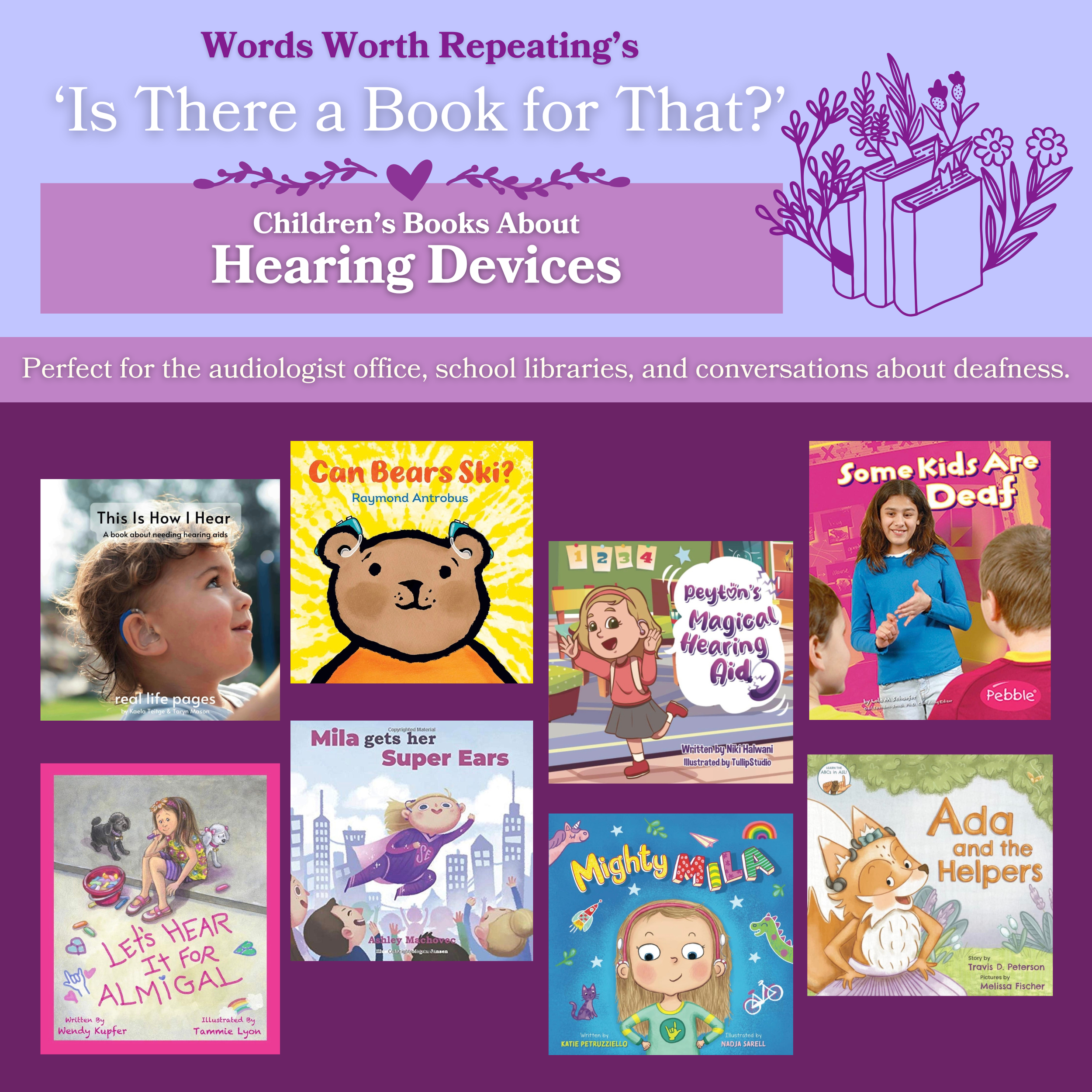
As I looked through a wide-variety of hearing device books, I was looking for books that would be good for classrooms, as educating kids about differences can be an important way to promote inclusivity. I was also looking for books that covered the process of going to an audiologist and getting the hearing aids or cochlear implant. I found several that covered this on a very simple basis, as the majority of the books I found were geared for young children. These books will be good for starting the conversations though more questions and details may need to be addressed, especially about cochlear implants and their surgical placement. As always, if you know of a great book, don’t hesitate to share it with me, and I will share on a future post. There were a few teenage books/comics that addressed being deaf that I hope to dig into soon (they take me more time). I’ll be sharing these older kid resources soon.
I do think there is a reason that most of these books were created for young children, as hearing often gets addressed earlier life. I was happy to find some well-written, engaging books, and I was also excited that some of them addressed sign language, as it can be an important tool and a piece of deaf culture. So please check them out. They all would be a great fit for a classroom, audiologist/SLP office, or to talk about differences at home. I do make a small commission if you purchase through the link, but feel free to also find in your local library or book store.
This Is How I Hear: A book about needing Hearing Aids by Kaela Teitge & Taryn Mason
This book tells the real life story of one boy who is going to see an audiologist because his mom has concerns about his hearing. The book talks about what happens using simple language and shows the reader his journey with real photos. This includes several different aspects of the experience such as the hearing booth, needing hearing aids, getting fitted for hearing aids, getting the hearing aids, what he notices, and how he gets used to them. I appreciate how this gives kids an idea of what to expect, but also be cautious to remind them that not everyone’s journey is the same. It might not be the best tool if your child is visiting the audiology, but likely won’t need hearing aids. It might be better for kids who are getting hearing aids or already have them, helping them process their own experience. This book could also be helpful for a sibling or a friend learning about another person’s experience. This book would be good for preschoolers through young elementary. https://amzn.to/4yuVqhG
Can Bears Ski? By Raymond Antrobus
This book is about a young bear who lives with his dad. The story explains that the windows shake and the floor vibrates when his dad wakes him in the morning. The book also gently helps the reader feel the Dad Bear’s frustration with the young bear who it seems isn’t listening. The book talks about various times when the Dad or the teacher asks him “Can bears ski?” This confuses the bear. The Dad Bear takes the young bear to an audiologist and he gets an audiogram. The book describes the hearing booth and then says he is given plastic ears called hearing aids. Finally at the end of the book, the young bear realizes that “Can bears ski?” was actually “Can you hear me?” The book is relatable and does a nice job of simply taking the reader through the process. My favorite part was that it hinted at the frustration that can come with hearing loss and at the changed sensations when the other senses are compromising. This book is good for preschool through middle elementary.https://amzn.to/4bAyvaS
Peyton’s Magical Hearing Aids by Niki Halwani
Although the title of this book refers to “magic”, the book is a simple story about a young girl on her first day of kindergarten. Many of her classmates ask her about her hearing aid, so she gets them all together and explains that her mother noticed when she was very young that she liked to turn the volume very loud. She went to an audiologist, used the hearing booth, and the doctor determined that she couldn’t hear in one of her ears. She then explains her hearing aid. This book could be useful for kids who want help explaining their hearing aid to a new classroom or for kids who have questions about a peer’s hearing aid. Of course, kids can have a wide range of hearing disabilities, so the adult reader may need to help explain what parts are the same or different in your situation. Simply worded to be appropriate for preschoolers through young elementary.
https://amzn.to/4b4n8rF
Let’s Hear It for Almigal! By Wendy Kupfer
This is a book about a school aged girl who wears hearing aids. She loves it that she matches her best friend who also wears hearing aids, but she is frustrated that there are still several things that she can not hear. Her mom takes her to the doctor and the doctor suggests that she wear cochlear implants instead. The book briefly talks about needing to have surgery and how easy the surgery was. It talks about some of the rules that come with cochlear implants like not getting them wet or trying them on your dog. I think this book would be helpful for kids who are learning about cochlear implants or classmates who wear them. Of course, all situations are not the same and some of the similarities and differences will need to be explained.
https://amzn.to/4pFGXM0
Mila gets her Super Ears by Ashley Machovec
This book was written by a Teacher for the Deaf. The book is a real life story about a girl who fails her hearing screening as an infant. It then takes the reader through the journey of testing a newborns hearing, hearing aids, going to the audiologist, using the hearing booth, and eventually getting cochlear implants. Because the simple children’s booth covers so much, some of the details of how it progressed and when she got her hearing aids was a little confusing. The role of the therapists and the people that helped her throughout various aspects of the story was highlighted. I can see this being on every SLP’s shelf to help kids understand why therapy and devices are important and to normalize the entire experience. Good for young to middle elementary kids. https://amzn.to/3R77m8J
Mighty Mila by Katie Petruzzieloo
This book features Mila, a young girl (maybe 5?) who has cochlear implants. The cochlear implants are not the stars of the show though. The storyline of the book is about how Mila is going to prove that she is grown up by doing everything for herself. In the end, she needs a little help, but she succeeds by showing how much she can do. The cochlear implants do especially help her when she is playing hide and seek and can hear her brother. This book is for normalizing cochlear implants and showing them in action. Great for any child especially preschool through young elementary age.
https://amzn.to/4wTzE5w
In addition, the author, a mother of a child with cochlear implants, has several free resources on her website including a customizable class presentation about a child’s hearing journey and devices and several worksheets that go along with the book. You can find all of that on the website: www.mightymila.com
Ada and the Helpers by Travis D. Peterson
This book is about a young fox with cochlear implants. The book says that she was born deaf, some readers might need more explanation. Once she was able to hear, she fell in love with dancing. She wants to perform at the local talent show but is feeling nervous about what people will say. On her way, she meets several animals who are struggling. It seems that they each don’t know how to use their own talents and are stuck on the things they can’t accomplish. Each time the young fox reminds them of their abilities that outshine the things they can’t do. Eventually she makes it to the talent show and all of her friends help her feel loved during her performance (breakdancing… in a tutu :) ? )Anyway, I think this can be a book that normalizes cochlear implants and also starts a conversation about everyone’s strength and struggles and how we can support each other. Another note: In the story, it says that her parents gave her the cochlear implants, and they call them her “helpers”. So this book will not be one you would use to prepare a child for an audiologist or getting the implants placed. Good for preschool through young elementary. My favorite part of the book is that several pages teach the readers to spell words from the story with sign language - an important skill when spending time with a deaf person.
https://amzn.to/4pAiPuf
Some Kids are Deaf by Lola Schaefer
This book is a great accompaniment to any of the stories lifted above. The book uses simple words and clear sentences to talk about deafness. There is a page about hearing aids, a page about cochlear implants, and a page about blindness. It talks about potential causes and speech therapists. It also talks about other adaptations like lights in the classroom to signal when class starts and ends and closed captioning. In general, this book can help your child build a basic understanding. When talking about deafness with a classroom, it could be helpful to read one of the stories above to help the class relate and then this book to clarify everyone’s questions and understanding.
https://amzn.to/3T4cF9w
