
* This image shows the old name for the ‘Is There a Book for That?’ blog/book list.
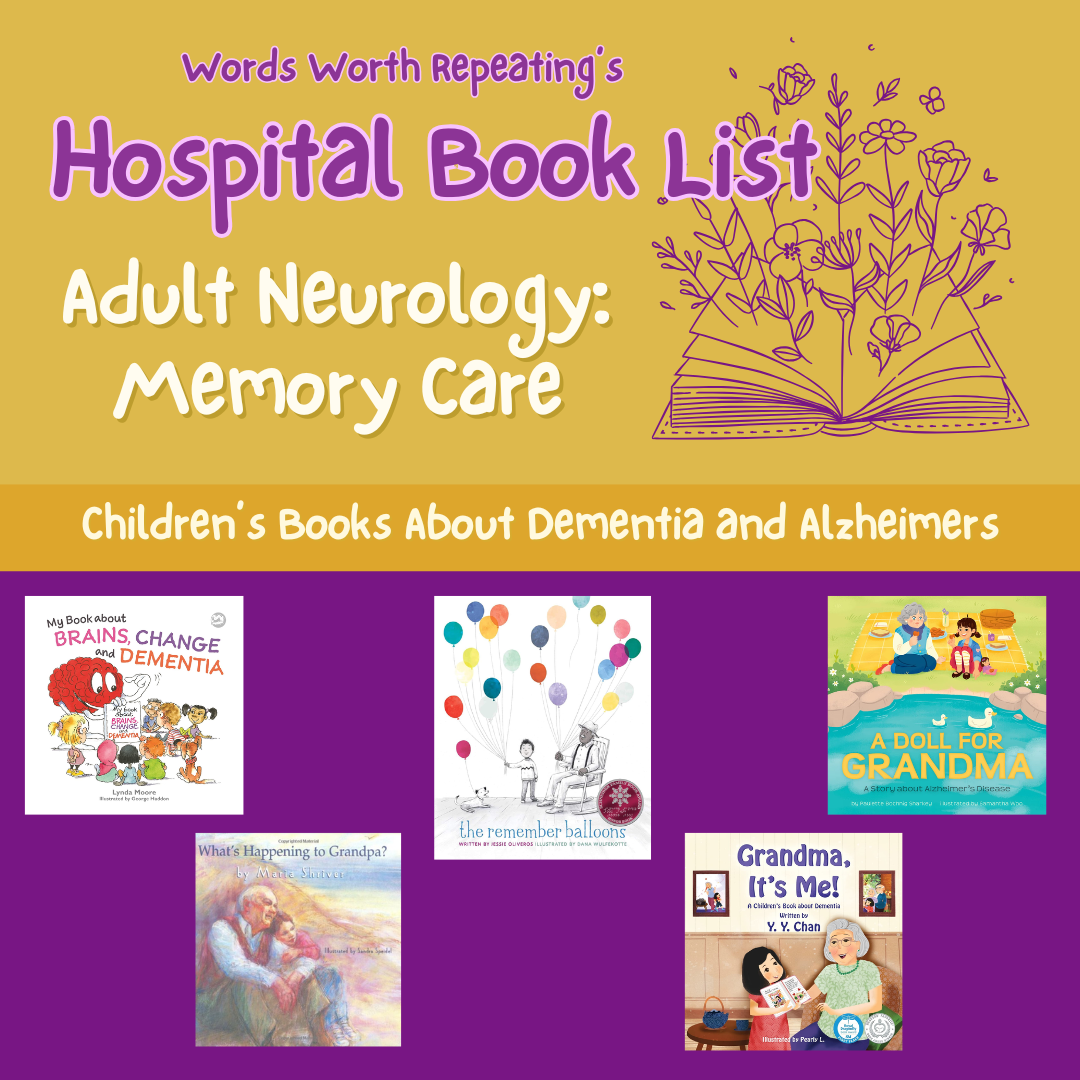
Did you all know that I create customized books for families who need a unique resource? Well, Alzheimer's and Dementia have been one of the most common topics. They can present so differently in different situations. Families often have a hard time finding the right resource that talks about what their child is experiencing. I will say that I was happily surprised to find several great general resources, and so I am excited to share them with you all.
I appreciate these books talk about a variety of common behaviors and touch on ways that kids can still connect with their loved one. Read below to find out more about each book's style, topics covered, and developmental level.
My Book about Brains, Change and Dementia: What is Dementia and What Does it Do? By Lynda Moore
Totally loved this book. It talks about the brain's many jobs, the importance of the brain, and what dementia might look like in a person. Then it covers common feelings and how the disease progresses. If you are trying to figure out how to explain dementia or Alzheimer’s to a child, I highly recommend this book - ages preschool through upper middle school.
https://amzn.to/4uUsOgf
The Remember Balloons by Jessie Oliveros
This is a beautiful analogy that can help kids understand memory loss. Each person has a balloon for every memory. The story tells the story of a boy who asks his grandpa about different balloons/memories. After a while, his grandfather’s balloons start flying a way which makes the boy sad. His parents help him see that he carries those balloons now. (Honestly, I cried when I read this one.) It is simple and beautiful and could be a nice way to start a conversation about memory loss. I recommend this book for preschool through middle elementary.
https://amzn.to/4sc2FYi
A Doll for Grandma: A Story About Alzheimer’s Disease by Paulette Bochnig Sharkey
This book tells the story of a girl who likes to hang out with her grandma. They do all sorts of things together. The girl starts to notice that her grandmother can’t remember things anymore. She ends up going to a facility and many of her favorite parts of her grandma have changed. One day when her grandmother calls her the wrong name (the name of her best friend as a little girl), the girl finds a new way to connect with her grandmother. She gives her a doll, and they play together. In this book, it seems like Alzheimer's progresses very quickly, so that might seem clarifying depending on your own personal situation. Or it may be better to use once a loved one is in a care facility. It could help kids find ways to connect with their loved one. Good for preschool through middle elementary.
https://amzn.to/4lDUMs7
Grandma, It’s Me! By Y.Y. Chan
This is a story about a girl who lives with her mom. Her grandma starts having a hard time remembering things and so her grandparents move in with her. The book tells stories of different times when the grandmother forgets or wonders and how her family takes care of her. The girl helps takes care of her grandma and has to learn to be patient when answer questions or when her grandma doesn’t remember who she is. While the details of this story might not match a child’s exact story, the book has lots of relatable moments that children who have a loved one with dementia will connect with. This book would be best for preschool - school aged children.
https://amzn.to/3Pit9c3
What's Happening to Grandpa?" by Maria Shriver
This book tells the story of a girl who is close to her grandparents. Over time, she starts noticing changes in her grandpa including forgetting things, not being able to drive, and getting angry at her grandma. Her mom explains that he has Alzheimer's. In the next pages, it answers lots of kids’ common questions about Alzheimer's. The book emphasizes the importance of family and the idea of creating a memory book. I will say this book is a little wordy and longer than the rest, so it would be better for kids with a longer attention span.
https://amzn.to/4uDoJN1
